
I was at the end of cooking dinner one night when it hit me — I was going to teach my kids how to cook this meal. But school had run long, I had work to squeeze in, and we’d snuck in some outside time before the afternoon slipped away. By the time I got to the kitchen, I was just trying to get food on the table. The intention was there. The follow-through wasn’t. And I felt it.
And that wasn’t the first time. The intention was always there. The follow-through rarely was. I started to realize that hoping to weave these lessons into our day wasn’t working — I needed something more intentional than hope.
Maybe you’ve been there too.
Life Moves Fast — And Good Intentions Aren’t Enough
A typical day in our house looks something like this: schoolwork in the morning, then chores, reading, and playtime for the kids while I work, do activities with them, and start dinner prep. It’s a rhythm I love — but the days go by fast.
Deuteronomy 6:6-7 paints such a beautiful picture of discipleship — that we are to impress God’s ways on our children over and over again. On the road. At home. At bedtime. It’s a vision of faith woven into the fabric of everyday life, where every in-between moment counts.
But if I’m being real? I spent a lot of days letting those moments pass me by without even realizing it. Busyness has a way of crowding out intention. And a beautiful vision without a plan is really just a wish.
The Lessons You Don’t Plan Are Often the Best Ones
That said, some of my favorite teaching moments have been the ones I never saw coming.
One afternoon, the kids and I were on a walk when the sky turned the most stunning shade of pink and orange, with clouds that looked like someone had painted them on. My daughter looked up and said, “This looks like a Bob Ross painting.” (Yes, we are big Bob Ross fans around here.)
That one little comment opened up a conversation about how God is the most incredible artist of all — the detail of His creation, the intentionality behind it. It wasn’t planned. It wasn’t in any lesson guide. But it became one of my favorite teaching moments we’ve ever had.
I treasure moments like that. But I also know I can’t build my kids’ faith and life skills on waiting for the sky to turn pink. Those moments are the bonus — not the plan.

Connect Real Skills to God’s Truth
One of my favorite ways to disciple my kids is to tie a practical life skill to Scripture or a character trait of God. It takes something ordinary and makes it meaningful — but it works best when you’ve already been thinking about it ahead of time, not when you’re scrambling at the end of a long day.
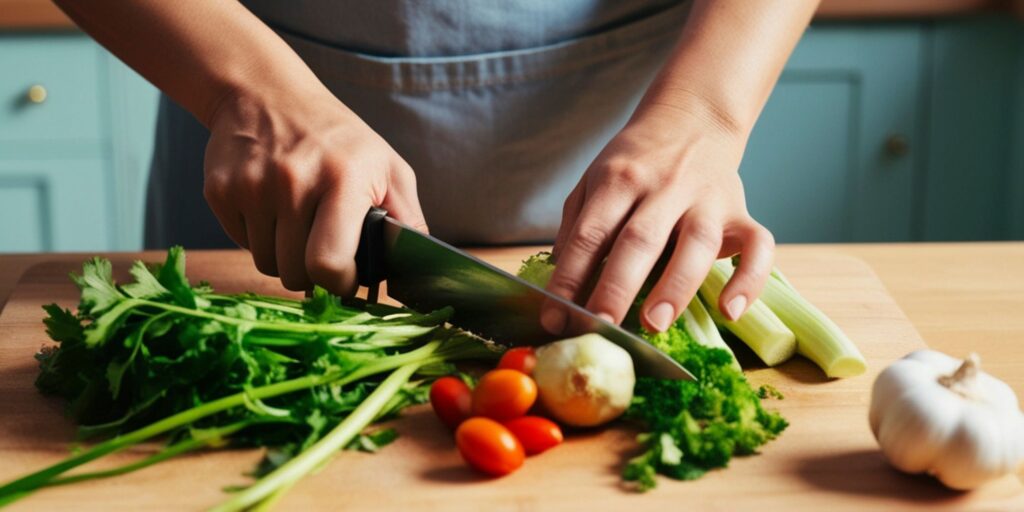
Take cooking, for example. Learning to cook isn’t just about reading a recipe or knowing how to use a knife safely. It can become a powerful lesson on honoring God with our bodies when you pair it with 1 Corinthians 6:19-20: “Do you not know that your bodies are temples of the Holy Spirit, who is in you, whom you have received from God? You are not your own; you were bought at a price. Therefore honor God with your bodies.”
Suddenly, what’s for dinner becomes a conversation about stewardship, health, and the way God values us. But that kind of connection doesn’t usually happen by accident. It happens when we’ve taken a little time to prepare.
You Don’t Have to Have It All Figured Out First
Here’s something I want you to hear, because I need to hear it too: you don’t have to be an expert to start teaching.
Healthy eating is actually something I’m still learning. I’ve had some health challenges over the past few years, and that’s pushed me to research nutrition in ways I never did before. I could wait until I have all the answers before I bring my kids into it — but honestly? I love that they get to watch me learn something new. I love that they see me pursuing what honors God, even when I’m still in the middle of figuring it out.
We get to learn together. And that’s a lesson in itself.
Start Where You Are — But Start with a Plan
Looking back, I wish there had been more resources to help me teach these skills to my kids from an early age. And more than that, I wish I’d had something to keep me from letting another dinner go by, another afternoon slip away, another good intention stay just that — an intention.
That’s why I created our Biblical life skills unit studies — not to replace the table conversations or the sunset walks, but to make sure the important things don’t keep getting pushed aside by a busy afternoon. The everyday moments are where faith comes alive. The unit studies make sure you’re ready for them.
Academics matter. But these skills? Your kids will carry them for a lifetime. And they’re too important to leave to chance.